Introduction
Artificial Intelligence (AI) is one of the important transformative technologies of our time, revolutionizing industries associated with our daily lives i.e., voice assistants like Siri and Alexa to self-driving cars. In this blog, I will take you to the World of AI with the basics and evolution to significance in the modern world. Join me as I explore how AI is reshaping the future and influencing every aspect of our lives.
Artificial Intelligence
Artificial Intelligence (AI) refers to the simulation of human intelligence in machines. These systems are designed to learn, think, and make decisions, performing tasks traditionally requiring human cognitive abilities. The machines acquire the human cognition ability, intelligence, by training with huge amounts of data and algorithms. The machines keep updating their knowledge to optimize their output. They become intelligent once they are trained with some information, which helps them to achieve their assigned tasks like speech recognition, decision-making, and problem solving. This capability of AI drives them to be used in all fields from healthcare to finance, making AI a cornerstone of our modern world. As AI evolves, it continues to revolutionize technology and foster innovation across diverse industries.
Evolution of AI
The Early Years (1940s-1950s)
The formal AI began its journey with key developments like Artificial Neuron and Turing Test in the mid-20th century.
1943: Warren McCulloch and Walter Pitts developed a model of artificial neurons, laying the groundwork for neural networks.
1950: Alan Turing introduced the Turing Test, a criterion for determining whether a machine can exhibit human-like intelligence.
Artificial Neuron is like the human body's biological neural network, a connection point in an artificial neural network and has a layered architecture and each network node, or connection point, can process input and forward output to other nodes in the network.
Turing Test, also called the imitation game by Alan Turing in 1950, is a test of a machine's ability to exhibit intelligent behaviour equivalent to, or indistinguishable from, that of a human.

Early computers and Alan Turing
The Birth of AI
The Dartmouth Summer Research Project on Artificial Intelligence was a 1956 summer workshop held at Dartmouth College in Hanover, New Hampshire, USA widely considered to be the founding event of artificial intelligence as a field. The project lasted approximately six to eight weeks and was essentially an extended brainstorming session. Early AI research focused on symbolic AI, where computers used symbols and rules to simulate human problem-solving.
The First AI Winter (1970s)
Despite early enthusiasm, AI faced significant challenges due to limited computing power and unrealistic expectations. This led to the first "AI winter," a period characterized by reduced funding and interest in AI research.
The Revival (1980s-1990s)
AI experienced a resurgence in the 1980s and 1990s with the advent of machine learning. Key milestones include
1980s: Development of expert systems that mimicked human expertise in specific domains.
1990s: Emergence of neural networks and the successful implementation of practical applications such as speech recognition and robotics.
The Modern Era (2000s-Present)
The 21st century has witnessed unprecedented advancements in AI, driven by increased computing power, vast amounts of data, and sophisticated algorithms. Major breakthroughs include
Deep Learning: A subset of machine learning involving neural networks with many layers, enabling remarkable progress in image and speech recognition.
Natural Language Processing (NLP): Technologies like chatbots and language translation have become more accurate and widely used.
Autonomous Systems: Self-driving cars, drones, and robots are becoming increasingly common.
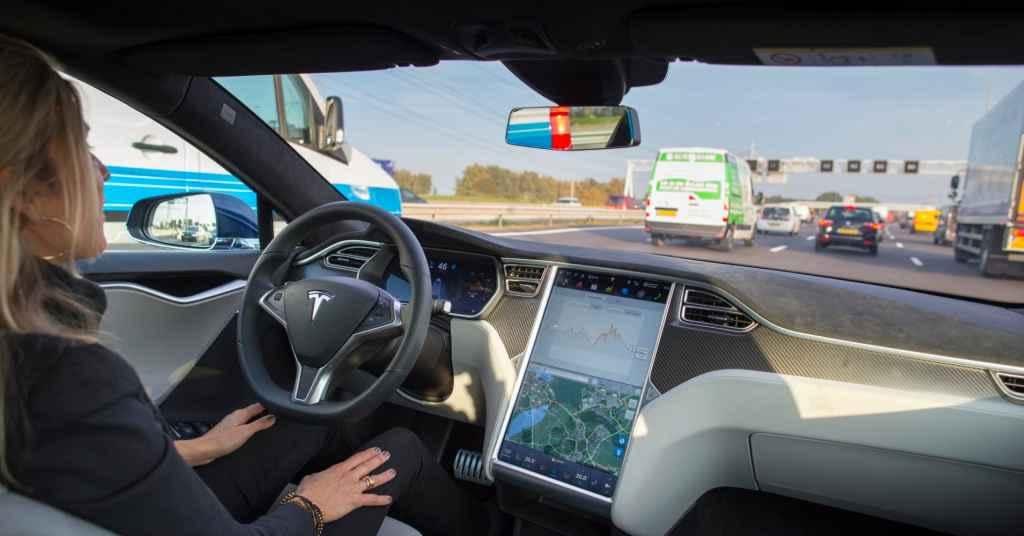
Self Driving Cars
Generalization of AI
Generalization in AI refers to how well a machine learning model can apply what it learns from training to new and unseen data. It is similar to a student who can solve problems that are not seen before by understanding the concepts of learning. Good generalization means the model that can make accurate predictions or decisions in real-world situations it was not explicitly trained on, making it reliable and useful across different scenarios. AI is categorized into three main types based on its capabilities.
Narrow AI (Weak AI)
Narrow AI is designed to perform specific tasks like virtual assistants (e.g., Siri, Alexa), recommendation systems (e.g., Netflix, Amazon), Chat GPT, Microsoft Copilot and facial recognition software.
General AI (Strong AI)
General AI refers to systems with the ability to understand, learn, and apply knowledge across a wide range of tasks, similar to human intelligence. While this remains a theoretical concept, researchers are continually working towards its realization.
Superintelligent AI
Superintelligent AI surpasses human intelligence in all aspects, including creativity, problem-solving, and social intelligence. This concept is speculative and raises important ethical and safety considerations.
The Current State of AI
Today, AI is integral to many sectors, driving innovation and efficiency. Some key areas where AI is making an impact include
Healthcare
AI is used for diagnosing diseases, personalizing treatment plans, and accelerating drug discovery. Imaging and predictive analytics powered by AI help in early disease detection and management.
Case Study: IBM Watson for Oncology uses AI to help doctors analyze patient data and literature to recommend personalized cancer treatments.
Question: How might AI-driven diagnostic tools change the patient-doctor relationship in the future?
Finance
In finance, AI helps in fraud detection, algorithmic trading, risk management, and providing personalized financial advice. AI systems can analyze vast amounts of data to identify patterns and make informed decisions.
Case Study: JP Morgan's COiN program uses machine learning to review legal documents and extract important data points, saving thousands of hours of manpower.
Question: Can AI in finance create a more transparent and fair financial system?
Transportation
AI powers autonomous vehicles, traffic management systems, and logistics optimization. Self-driving cars and drones are transforming transportation and delivery services.
Case Study: Waymo, a subsidiary of Alphabet Inc., uses AI for its self-driving car technology, aiming to reduce traffic, accidents and improve mobility.
Question: What are the potential societal impacts of widespread autonomous vehicle adoption?
Retail
Retailers leverage AI for inventory management, customer service through chatbots, personalized marketing, and sales forecasting. AI helps in understanding customer behaviour and enhancing their shopping experience.
Case Study: Amazon's AI-driven recommendation engine suggests products to customers based on their browsing and purchasing history, significantly increasing sales.
Question: How can AI enhance the personalization of the online shopping experience?
Entertainment
AI-driven content creation, video and music recommendations, and interactive gaming experiences are transforming the entertainment industry. Platforms like Netflix and Spotify use AI to recommend content tailored to individual preferences.
Case Study: Netflix uses AI algorithms to recommend shows and movies to users, resulting in increased viewer engagement and retention.
Question: How might AI shape the future of creative content production?

Agriculture
AI powered drones and robots are used for disease diagnosis and management, product identification and harvest; identification of best parents and prediction of their progeny using different plant breeding and genomic prediction tools involving AI algorithms
Case Study: Blue River Technology's See & Spray system uses AI to identify and precisely apply herbicides to weeds, reducing chemical usage and promoting sustainable farming.
Question: How AI is helpful in meeting the Sustainable Development Goals of the UN related to Agriculture allied fields.
Conclusion
Artificial Intelligence has come a long way since its inception, evolving from theoretical concepts to practical applications that permeate every aspect of our lives. Understanding the basics and evolution of AI helps us to appreciate its transformative power and prepare for the exciting advancements ahead for the benefit of humankind. As we continue to explore the potential of AI, it is essential to consider the ethical and societal implications of this powerful technology.

I invite you to share your perspectives or experiences with AI in the comments.
How has AI impacted your life or work?
What do you think the future holds for AI in various industries?
Join the conversation and let us explore the fascinating world of AI together.
Stay tuned for more in-depth articles as we delve deeper into the fascinating world of AI and its myriad applications.